Join a community of readers who are committed to Jewish stories
Sign up for JBC’s Nu Reads, a curated selection of Jewish books delivered straight to your door!
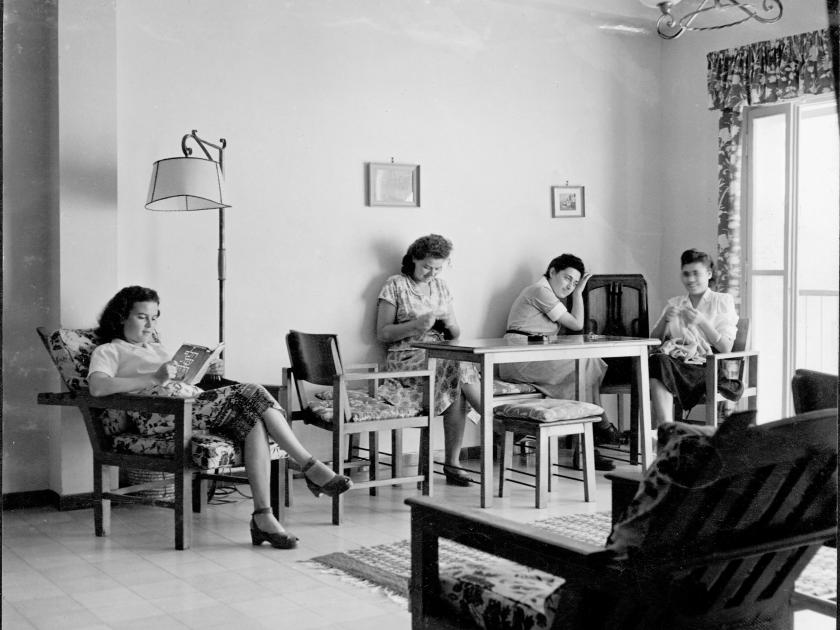
Genia Averbuch. The library at the Women Pioneer House in Jerusalem, 1942. First prize in a competition, established by The General Council of Women Workers in Eretz Yisrael and Women’s League for Palestine (WLI) (exist with major changes)
From the collections of the Central Zionist Archives, Jerusalem. (PHKH\128340) Photo: Joseph Schweig
Lotte Cohn immigrated from Berlin to Palestine under the British Mandate in 1921, and became the first female architect in the country. In 1935 she described the phenomenon of women architects in Eretz Yisrael in an article published in the daily newspaper Doar Hayom entitled The Eretz Yisrael Woman in Technical Fields:
Eretz Yisrael is a country not bound by the strong bonds of tradition. It is open to innovation and is always willing to follow a new spirit. This phenomenon especially stands out in the technical professions. The European world is slow to accept women in technical fields. In Eretz Yisrael, women have already been recognized as engineers, architects, and agricultural workers. When a woman appears on a scaffolding or in a construction office, when she wears overalls on a construction site and joins men doing flooring or carpentry work, when she sits in an office at the drawing table, or when she fights for a building permit at City Hall – these situations are no longer considered unusual, and no one belittles them.
I first became aware of the work of female architects in Eretz Yisrael in the early 2000s while researching the Levant Fair, an international trade exhibition held in Tel Aviv in 1934. The finest local modern architects of the time designed superb permanent buildings for the exhibition. Two of them were female architects: Genia Averbuch and Elsa Gidoni Mandelstamm. Together, they designed Café Galina, which is considered an outstanding example of modernist European architecture in Pre-State Israel and a milestone in the development of local architecture.
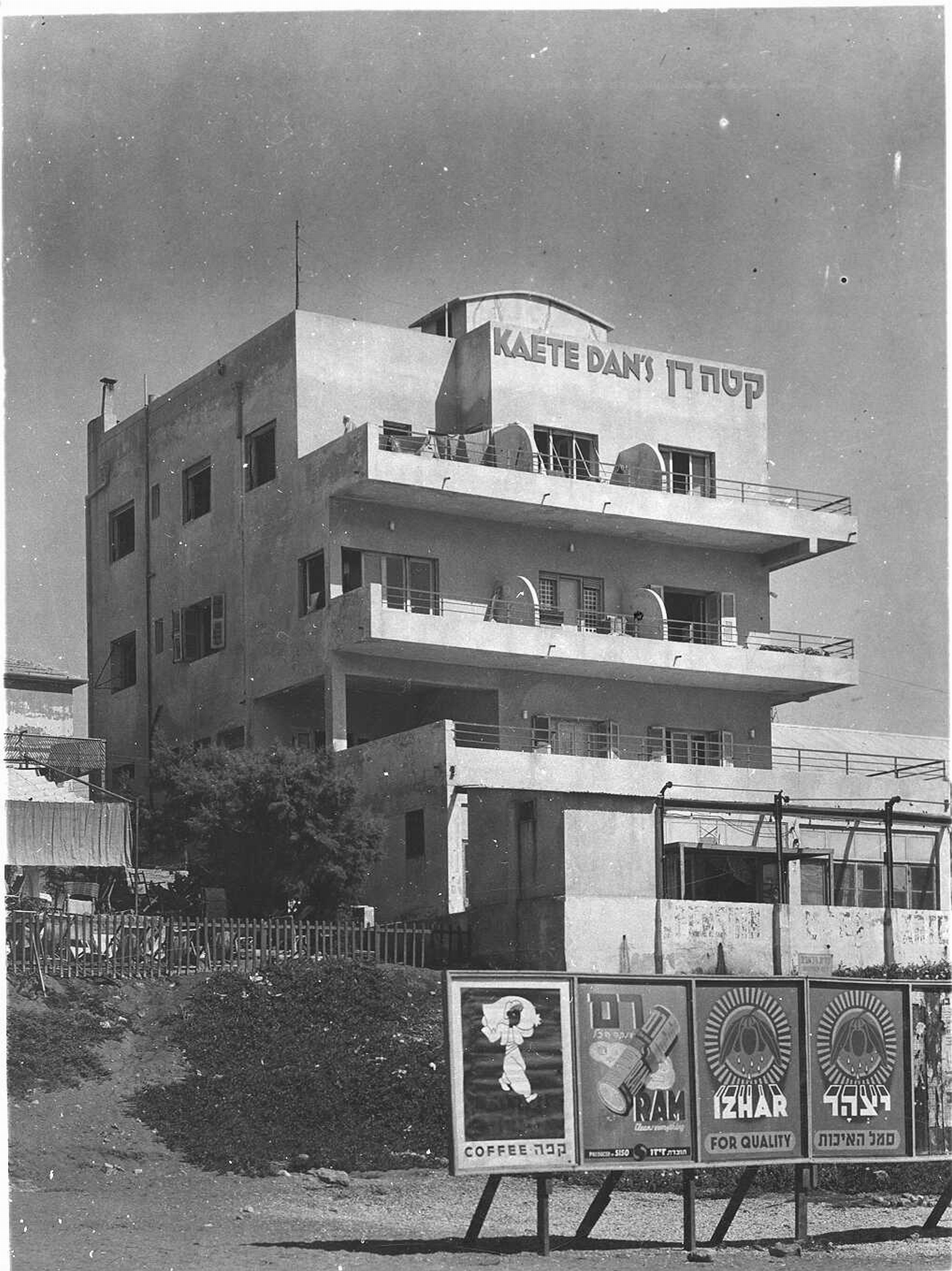
Lotte Cohn. The Kaete Dan Hotel, 1932. Hayarkon Street Tel Aviv, established by Ms. Kaete Dan (demolished)
From the collections of the Central Zionist Archives, Jerusalem. (PHWI1247169)
Averbuch is known for her design of the central square of Tel Aviv, the Zina Dizengoff Square, but I found almost nothing about Gidoni Mandelstamm. The lack of information drove me to embark on a fascinating decade-long journey filled with surprising discoveries. My search for materials ultimately uncovered many additional female architects who were among the first female architecture students in European universities and the first to practice in Mandatory Palestine. I collected historical documents from forty archives, in Israel and around the world, and located the buildings these female architects designed throughout the country. I also gathered information about these women by interviewing their remaining family members, friends, and employees in their architectural firms. The journey culminated in a doctoral dissertation on the work of female architects in Eretz Yisrael, from which my book was born. I received the Goldberg Award for an outstanding first manuscript by the Open University of Israel, and in 2020 it was published in Hebrew. The English edition –Modern Architecture and Gender in Pre-State Israel – is now available, bringing the lesser-known stories of female architects to a new audience.
I discovered that Lotte Cohn, Elsa Gidoni Mandelstamm, and Genia Averbuch designed all the institutions of four prominent Zionist women’s organizations during the 1930s and 1940s: WIZO (Women’s International Zionist Organization), Moetzet Hapoalot (The General Council of Women Workers in Eretz Yisrael), Women’s League for Palestine (WLI), and Mizrachi Women’s Organization of America (MWOA). These organizations founded new social institutions for Jewish women in Eretz Yisrael. They established educational, social, and healthcare institutions to support women — whether new immigrants or long-time residents, workers or bourgeois homemakers — in the kibbutzim, villages, and cities, creating a supportive female community. These organizations provided professional training, support for mothers, and affordable housing for single women. After World War II, these organizations broadened their goals of instilling modernist ideas of progress into the field of education for children and youth.
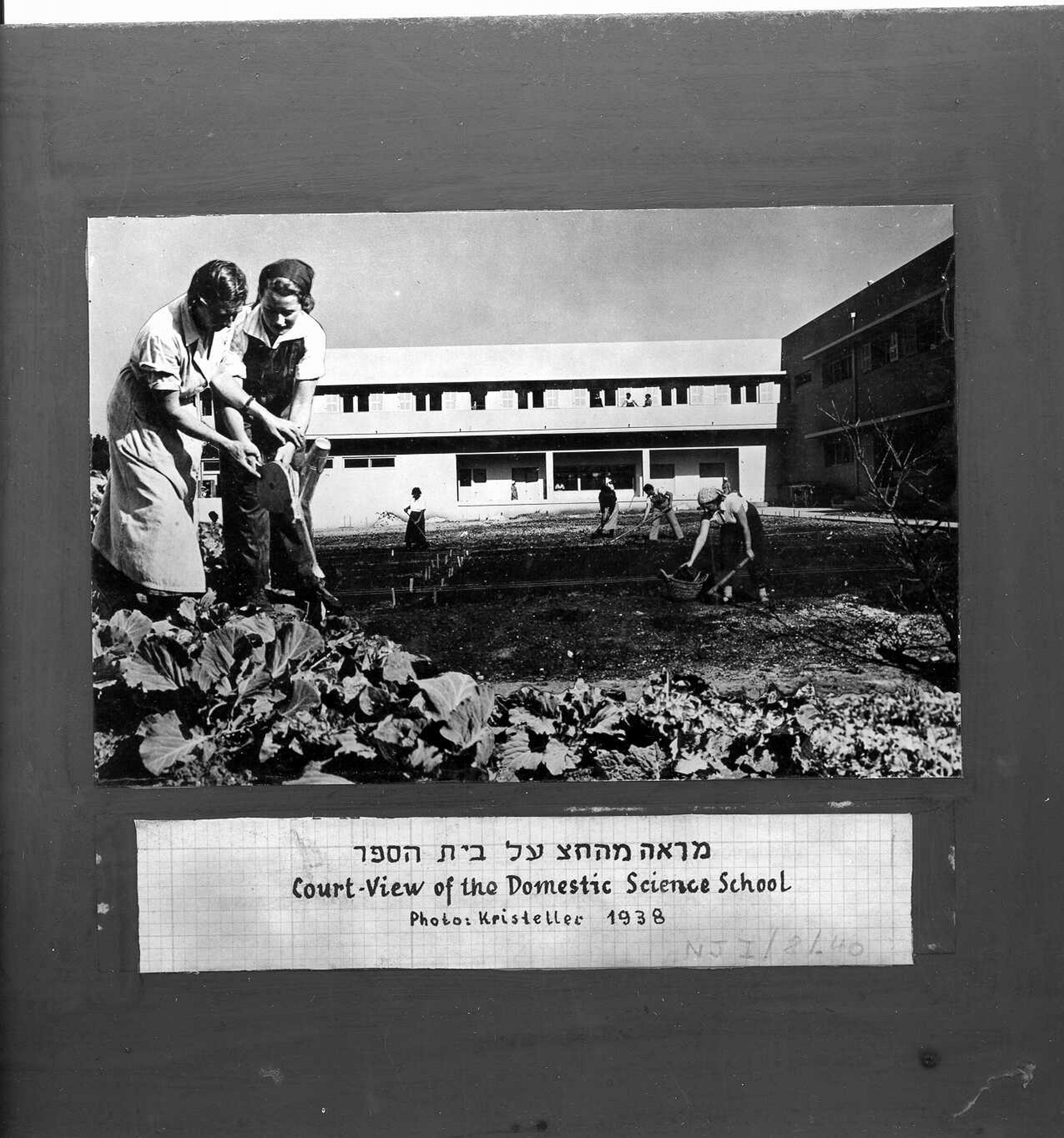
Elsa Gidoni Mandelstamm. Domestic Science and Agriculture School, Nachlat Yitzhak neighborhood, Tel Aviv 1936. First prize in a competition, established by WIZO (demolished)
From the collections of the Central Zionist Archives, Jerusalem. (PHKH\1245003)
In the documents that contain discussions of the buildings’ architecture, the leaders of the women’s organizations were pleased to select a female architect and praised the work of female architects in general. After Gidoni won an architectural competition, a spokesperson for WLI remarked: “We, too, were quite thrilled with the idea that the erection of this Home for girls, sponsored by a women’s organization, will be erected by a woman architect.” Gidoni Mandelstamm, who was already commissioned by WIZO to design its Domestic Science and Agriculture School, was also pleased: “My next project — which already makes me happy — is the Women Pioneer House in Tel Aviv. Like the WIZO building, this building, too, will require careful attention. However, such responsibility encourages an architect — especially a woman architect.”
As my archival research progressed, an increasing number of buildings designed by women architects came to light in Eretz Yisrael, revealing a substantial and previously underrecognized body of work by practitioners who led their own private offices. Professional success exacted a high cost; many of the women architects did not have children, which affected the burnishing of their legacies. There were usually no descendants to document and preserve the architects’ work, such as cataloging their projects and preserving architectural plans and photographs.
My work has opened up a rich, unexamined field of research regarding the role of female architects in developing modern architecture in Israel. This body of work has been overlooked by the historiographies of modern architecture as well as the historiographic record of the Jewish community (the Yishuv) and remains outside the Israeli historical discourse. The book elaborates on these organizations’ activities and their collaborations with these female architects.
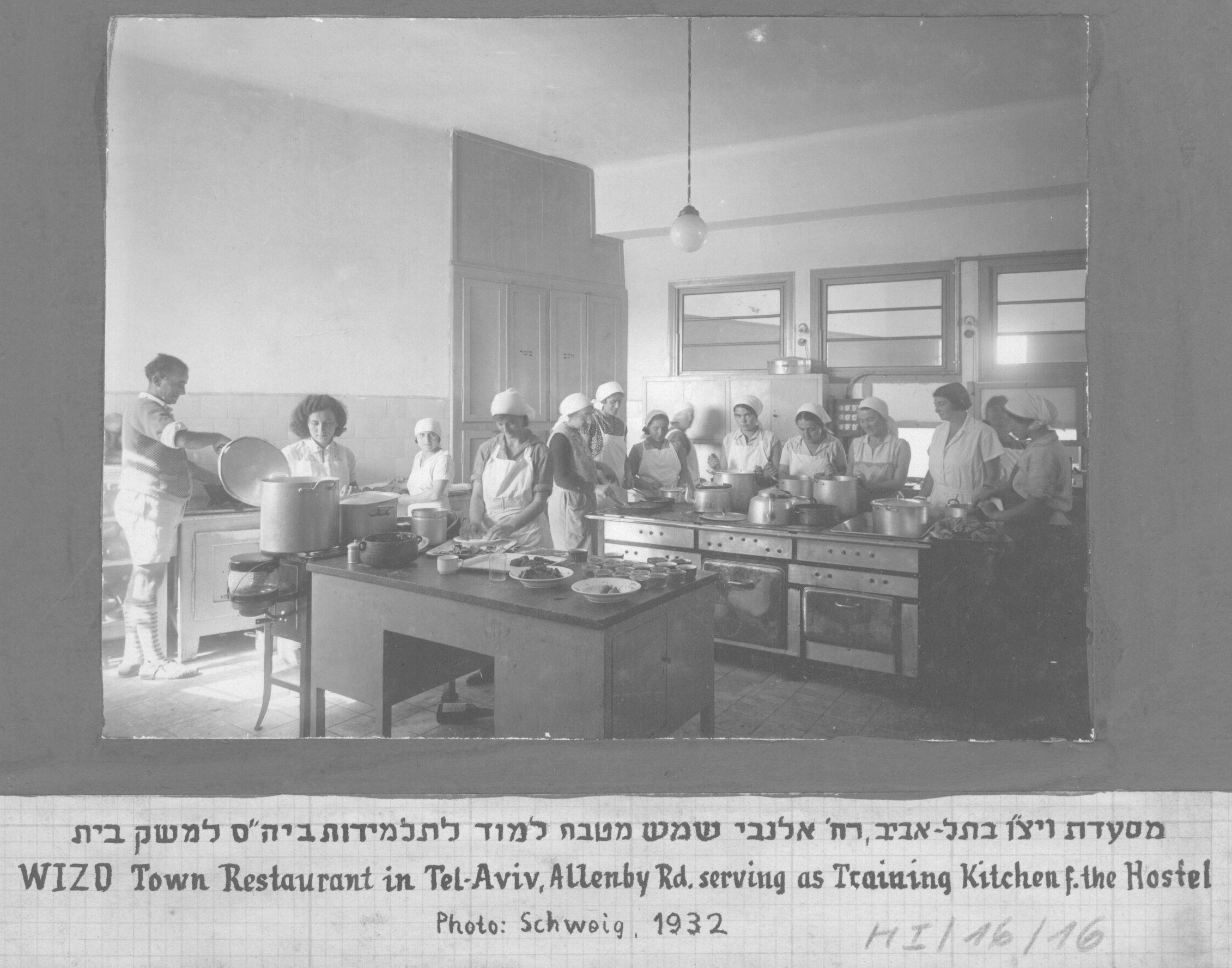
Lotte Cohn. The WIZO kitchen, 1932. First electrified public kitchen in Eretz Yisrael, established by WIZO (demolished)
From the collections of the Central Zionist Archives, Jerusalem. (PHWI\1245029) Photo: Joseph Schweig
By using gender as my main approach to the research of modern architecture during the Mandate period, our understanding of its development changes. This study has revealed a more detailed and accurate picture of modern architecture in Israel by tracing its processes and achievements and documenting the work of women architects as central partners in its development. It has also provided new insights into women’s roles as professionals, leaders, pioneers, and laborers, and their contribution to the social and cultural fabric. My study joins a growing body of knowledge worldwide regarding modern women architects and designers at the beginning of the twentieth century. In recent decades, an increasing number of studies have been published on overlooked modern women architects and designers whose work has been forgotten. The historical record is gradually being corrected. The time has come to do the same for the first women architects of Israel.
Dig deeper into Modern Architecture and Gender in Pre-State Israel here! Check out a video from Sigal Davidi about her reserach and work here.
Sigal Davidi is an architect and architectural historian who received her PhD from Tel Aviv University, Israel.