Join a community of readers who are committed to Jewish stories
Sign up for JBC’s Nu Reads, a curated selection of Jewish books delivered straight to your door!
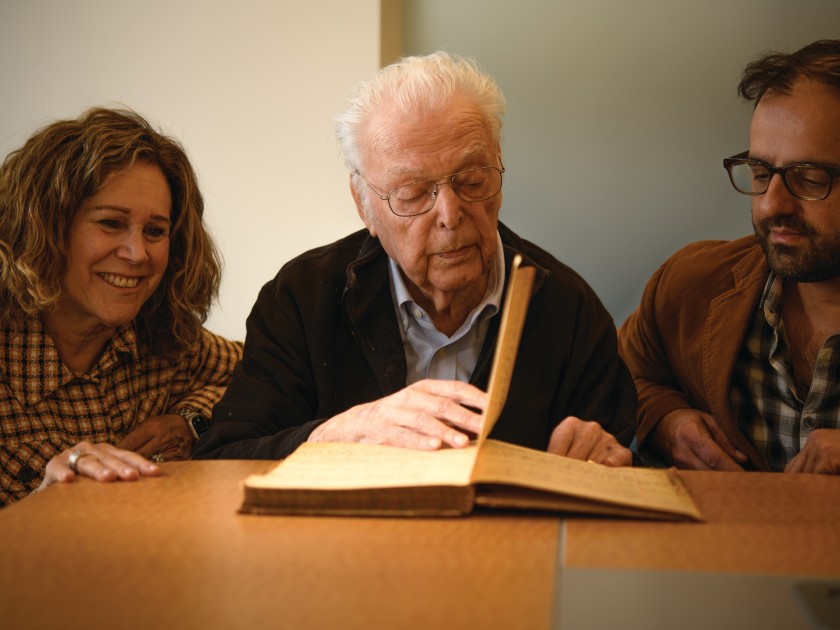
Steven Fenves turning the page in his rescued family cookbook. June Hersh on the left and Alon Shaya on the right.
Courtesy of the publisher
Serves 6 to 8
Though the Fenves family lived in Yugoslavia during the war, their culinary heritage was profoundly influenced by Hungarian traditions — a natural influence given they lived in Subotica, right on the border. Goulash was on regular rotation in their home, a comforting, everyday dish that’s especially hearty in the wintertime. Traditionally, it might be paired with spätzle or crusty bread, but the egg noodles are a distinctly Jewish touch, the same noodles that appear in chicken soup and kugel. Maris always had a variety of pickled vegetables on hand, and here, they cut through the richness and brighten it both in color and flavor. During the war, such a dish would have felt like a rare luxury. Steven’s request that we include it at every Rescued Recipes dinner speaks volumes about the significance it holds.
2 ¼ pounds beef chuck roast, cut into 1‑inch cubes
1 tablespoon plus ½ teaspoon Morton kosher salt, divided
1 teaspoon ground black pepper
¼ cup neutral oil
1 large head fennel, trimmed, cored, and roughly chopped
1 medium onion, cut into ½‑inch dice
2 to 3 Hungarian wax or poblano peppers, seeded and cut into ½‑inch dice
3 cloves garlic, thinly sliced
1 tablespoon sweet paprika
1 tablespoon smoked paprika
1 tablespoon ground caraway seed
¼ teaspoon onion powder
¼ teaspoon garlic powder
⅛ teaspoon cayenne pepper
¼ cup tomato paste
4 cups Oxtail Broth (see recipe) or beef broth
2 fresh bay leaves
1 tablespoon chopped fresh oregano
1 tablespoon liquid aminos or soy sauce
1 ½ pounds Yukon Gold potatoes (4 to 5 medium), peeled and cut into 2‑inch pieces
14 ounces smoked sausage (about two 8‑inch links), cut into ½‑inch half-moons
1 teaspoon sherry vinegar
Buttered Egg Noodles (recipe follows), sour cream, and chopped fresh parsley, for serving
Serves 6 to 8
The nutritional yeast in this recipe is optional but gives the noodles a buttery, cheesy, and deeply savory flavor that goes a long way. It’s a little trick to take something already so perfect in its simplicity and make it even better.
2 tablespoons plus ½ teaspoon Morton kosher salt, divided
1 pound egg noodles
4 tablespoons (½ stick) unsalted butter
⅓ cup chopped fresh parsley, plus more for serving
2 teaspoons nutritional yeast (optional)
1 teaspoon ground black pepper
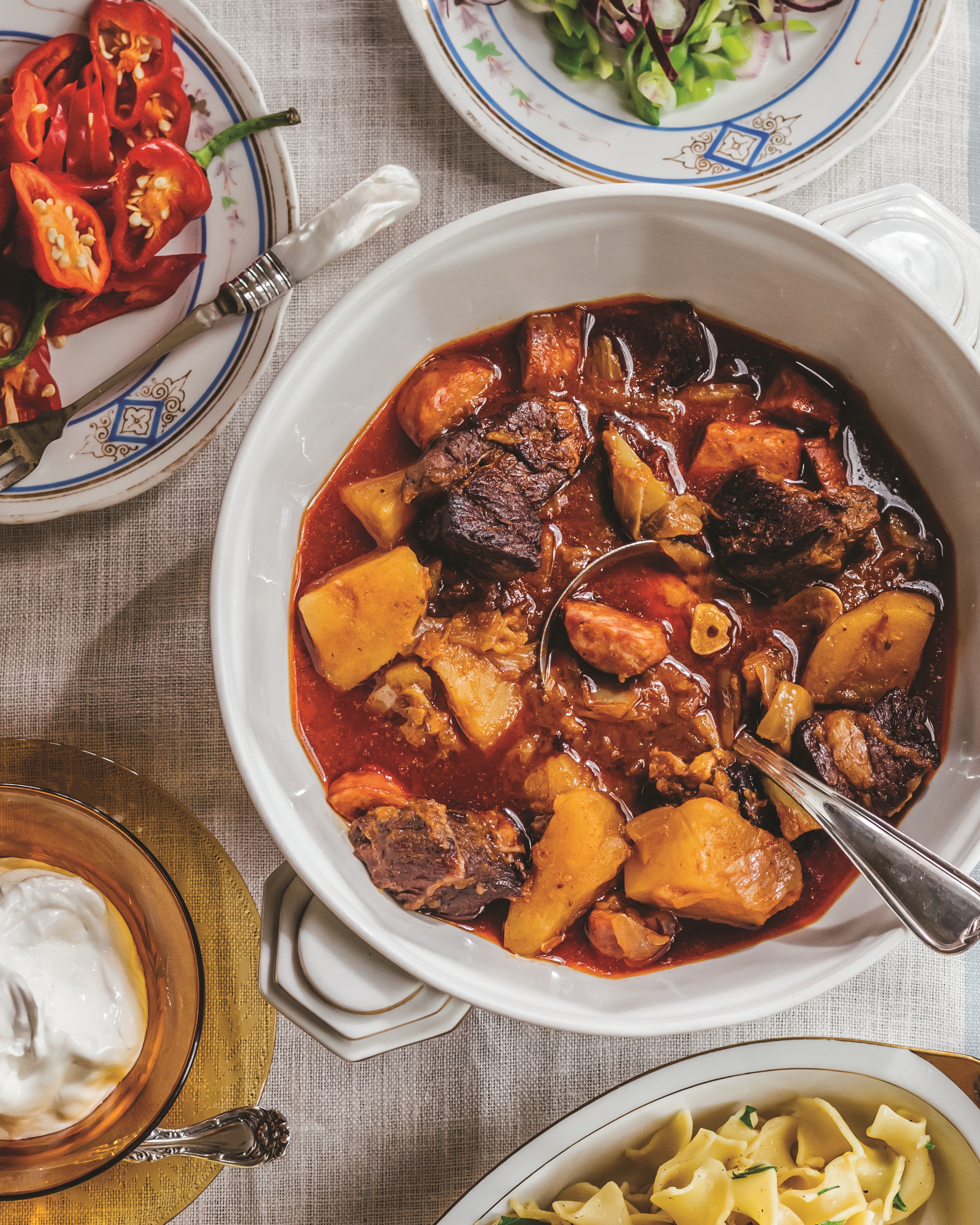
Photo by Denny Culbert
From Memories of a Good Meal: Recipes of Resilience Inspired by Stories of World War II Survival, by Alon Shaya with June Hersh, published by Harvest, October 6, 2026. Reprinted courtesy of HarperCollinsPublishers.
An award-winning chef, Alon Shaya was born in Israel, raised in Philadelphia, and is a proud New Orleanian. His restaurants include Saba and Safta’s Table in New Orleans and Safta in Denver. In 2021, Shaya spearheaded the Rescued Recipes initiative with the United States Holocaust Memorial Museum. The author of Shaya: An Odyssey of Food, My Journey Back to Israel, he has been recognized by The Forward as one of the “50 Most Influential Jews in America.”
June Hersh combined her passions as an avid cook and writer in her first book, Food, Hope & Resilience, with all proceeds benefiting Holocaust-related organizations. She is also the author of The Kosher Carnivore, Still Here: Inspiration from Survivors and Liberators of the Holocaust, and Iconic New York Jewish Food. June speaks across the country and writes on the topic of connecting food and culture.