Join a community of readers who are committed to Jewish stories
Sign up for JBC’s Nu Reads, a curated selection of Jewish books delivered straight to your door!
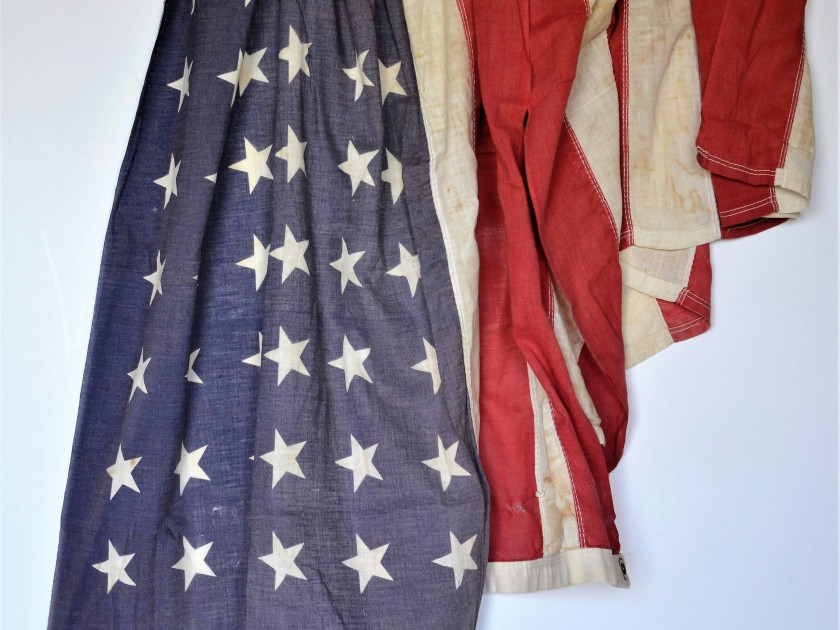
This year marks the 250th anniversary of the signing of the Declaration of Independence. In honor of this, we put together a reading list of nonfiction books that explore Jewish life and experiences during the early years of US history. For more books on American Jewish studies and life, click here.
A Promised Land: Jewish Patriots, the American Revolution, and the Birth of Religious Freedom by Adam Jortner
“Adam Jortner’s A Promised Land is a magisterial history of America’s first Jewish citizens. It weaves tales of prominent leaders like Gershom Seixas and Jonas Phillips with little-known accounts of revolutionary Jewish troops, fundraising for the first synagogues (and subsequent intracommunal disputes), and Jews responding to antisemitism by challenging their antagonists to life-endangering duels.” ‑Stuart Halpern
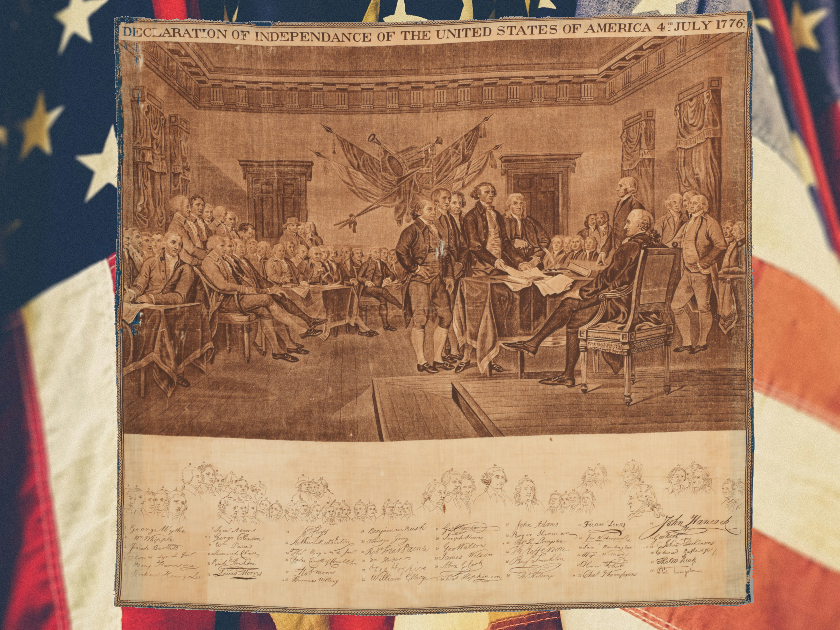
“Making the Revolution Jewish” by Adam Jortner
“Jewish patriots left evidence of their patriotism in Yiddish. One Jewish patriot wrote in 1770 that he thought George III was full of narishkeit, and another called American soldiers rookim—Yiddish for‘nonsense’ and‘tough guys,’ respectively.” ‑Adam Jortner
The Jewish World of Alexander Hamilton by Andrew Porwancher
“As an outsider whose talent and ambition enabled him to become an insider in a society that undercut the advantages of patrician ancestry, Hamilton exuded Jewish attributes. Historian Andrew Porwancher dares to go even further: the immigrant creator of an eminently successful financial system actually was a Jew. Sort of. Or such is the ingenious and tentative case that The Jewish World of Alexander Hamilton advances in this supremely revisionist work.” ‑Stephen Whitfield
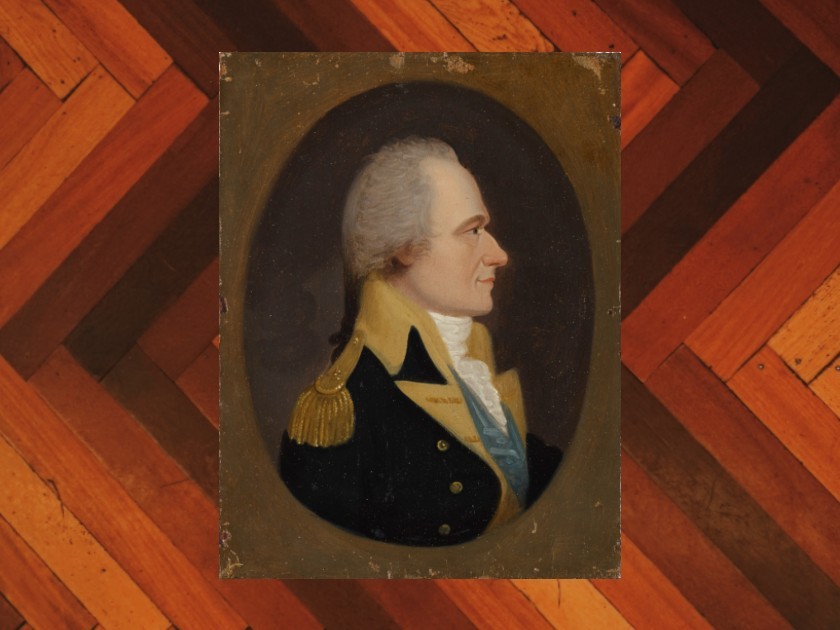
“Alexander Hamilton and His Jewish Witnesses” by Andrew Porwancher
“Like all people, Hamilton was indelibly molded by his beginnings. His emphatic critique of antisemitism in court — the most full-throated repudiation of antisemitism to come from the lips of any American founder — vividly illustrates how the roots of religious equality in the United States are inseparable from Hamilton’s own.” ‑Andrew Porwancher
America’s Prophet: Moses and the American Story by Bruce Feiler
“In the course of traveling around the United States, Bruce Feiler, the author of several books and host of the popular PBS series“Walking the Bible,” began to notice a surprising recurrence: at critical points in their history, Americans consistently pointed to the Exodus and Moses as their guiding inspiration. Moses, in Feiler’s words, is“America’s true founding father.” ‑Maron L. Waxman
Who Is American?: Belonging and the Question of Jewish Citizenship by Lila Corwin Berman
“As Berman amply demonstrates, while the US has been unique in offering its Jewish citizens acceptance compared to other countries, the path towards protecting the rights of those citizens has not lacked problems, complications, and ongoing debates, within and beyond the American Jewish community.” ‑Stuart Halpern
By Dawn’s Early Light by Princeton University Art Museum
“Chapters cover contributions to American Jewish history — the founding period, antebellum immigration, early American Judaism, the press, medicine, women writers, music, artists and leading figures, and subversives.” ‑Arlene B. Soifer
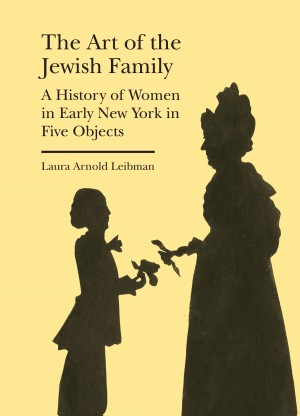
The Art of the Jewish Family: A History of Women in Early New York in Five Objects by Laura Arnold Leibman
“In her volume, produced as part of the Bard Graduate Center’s Cultural Histories of the Material World series, Leibman examines paper fragments, silver cups, miniature portraits made of ivory,“commonplace books,” and artistic renderings of family silhouettes to paint a more complete picture of early American Jewish women who have too often been neglected in the scholarly accounts.” ‑Stuart Halpern

Jews Across the Americas: A Sourcebook, 1492 – Present by Adriana Brodsky and Laura Arnold Leibman
“Jews Across the Americas is a groundbreaking sourcebook capturing the historical diversity and cultural breadth of American Jews across Latin America, the Caribbean, Canada, and the United States. Featuring primary documents as well as scholarly interpretations, Jews Across the Americas builds upon new developments in Jewish Studies, engaging with transnationalism, race, sexuality, and gender, and highlighting the lived experiences of those often left out of Jewish history.” ‑From the Publisher
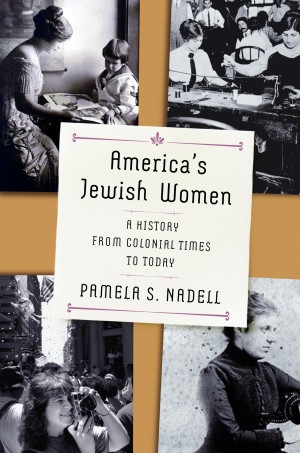
America’s Jewish Women: A History from Colonial Times to Today by Pamela S. Nadell
“Nadell approached her project by breaking it down into five chapters, each about a mix of social groups and time periods. The colonial“Jewesses” are followed by nineteenth century domestic mothers, turn of the century immigrants, mid-twentieth century semi-assimilationists, and then finally, our contemporaries. Nadell sketches the history with a broad brush, peppering it with anecdotes of individual women.” ‑Bettina Berch
The Jewish South: An American History by Shari Rabin
“A major aspect of Jewish life in America, however, was based in the states of the South, and that is the story Shari Rabin undertakes to tell in this compact but comprehensive history.” ‑Martin Green
Imagining Early American Jews by Michael Hoberman
“Imagining Early American Jews is a critical analysis of the Jewish American experience — both real and imagined. Readers will appreciate how Hoberman brings American Jewish history to life through his first-person exploration and its relevance to the challenges facing the American Jewish community today. This book deepens readers’ appreciation for how history unfolds versus how it is told.” ‑Jonathan Fass
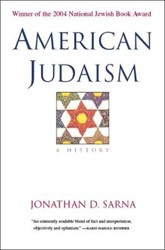
American Judaism: A History by Jonathan D. Sarna
“Jonathan Sarna has given us a masterful gift to commemorate the 350th anniversary of Jewish settlement in America. Drawing on his own encyclopedic knowledge of Jewish life in America, his American Judaism provides readers not only a wellcrafted and eminently readable history but an insightful retrospective allowing us to face the next 350 years with hope.” ‑Norman H. Finkelstein